From Refugee Child to Community Servant: Faith, Memory and the Long Road to Helping Others
There are moments in life which appear small at the time, but when one looks back many years later, they seem to carry the weight of an entire lifetime. A meeting, a journey, an act of kindness, a loss, a prayer I learnt in childhood, or even a watch given away in a moment of youthful devotion—these can remain engraved in the mind long after the faces, places and circumstances have changed.
Reading about the spiritual traditions of Bangladesh recently brought back memories of my own boyhood and youth, particularly my brief but memorable association with the Pir family of Maizbhandar in Chittagong.
Maizbhandar is a name known across Bangladesh and beyond, especially among Sunni Muslim devotees who follow the spiritual traditions associated with Pir-Murshid relationships. In villages, towns and cities, many families have long maintained an attachment to spiritual teachers, saints, mazars and religious households. For some, this connection is inherited through generations. It becomes part of family identity, community culture and personal faith.
My own family, I was told, had been connected with the Maizbhandar Pir family for more than a century. It was not something that I fully understood as a child. Like many boys growing up in Bengal, I accepted what elders said without questioning too much. Religious traditions, family stories, reverence for saints and the expectation of respect towards spiritual figures were all woven into the fabric of life.
Yet my own path was never straightforwardly religious.
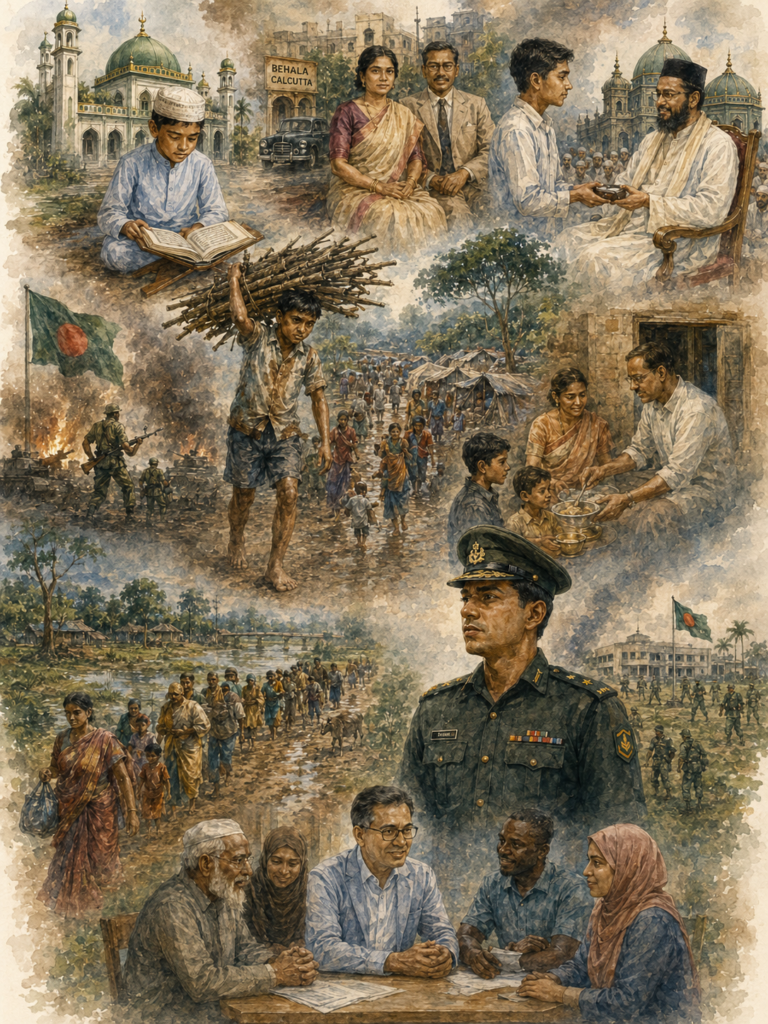
In my early childhood, I attended the madrasa of Hazrat Shahjalal in Sylhet. There, when I was around seven, eight, or nine years old, during 1967, 1968, and 1969, I learnt to read the Qur’an. I was taught the Arabic alphabet, Qur’anic recitation, the basic prayers, and the Adhan—the call to prayer. Like many children of my generation, I learned these things not as an intellectual pursuit but as part of growing up. Religion was present in the air around us: in the sound of the mosque, in the voices of elders, in the manners of the household and in the rhythm of village and town life.
But childhood innocence does not remain untouched by history.
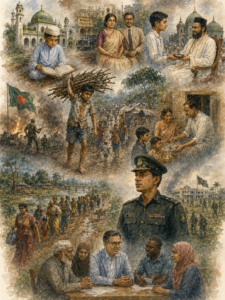
The Bangladesh Liberation War changed our lives beyond recognition. It changed our family, our sense of safety, our belief in the stability of the world, and perhaps even our understanding of God, religion and human beings. We became homeless. We crossed into India and became refugees. For nine long months, our lives were governed by uncertainty, hunger, illness, fear, and the daily struggle for survival.
I did not see my father for those nine months. He was far away, fighting in the Liberation War. His absence was not simply the absence of a father from a home. It was the absence of protection, certainty and reassurance. We did not know what might happen to him. We did not know whether we would ever see him again.
My eldest brother, too, had joined the freedom struggle. I saw him only once during that period. He was young, but history had forced young boys and girls across Bangladesh to grow up overnight. In those days, there was no room for ordinary childhood. One had to become useful. One had to carry responsibility. One had to do whatever was needed to keep a family alive.
I became, in many ways, the man of the family while still only a boy.
I collected rations. I gathered firewood from the jungle. I carried out the small and large chores necessary for survival in the refugee camp. I watched my mother struggle. I saw people around us weakened by hunger, malnutrition, disease and despair. I too suffered from conjunctivitis, skin disease, malnutrition and physical weakness. Hunger was not an occasional discomfort; it was a constant companion. Fear was not an emotion that came and went; it lived with us every day.
The refugee experience leaves a mark on a person. It teaches you that life can collapse suddenly. It teaches you that respectability, education, family background and social standing can all become fragile when violence enters a society. One day you may have a home, books, neighbours and a future. The next day, you may be carrying your belongings, sleeping in uncertainty and depending upon the goodwill of strangers.
I will never forget the kindness of a Hindu family in Agartala, about 10 miles away, who sheltered us for a month or so before we moved into the refugee camp. At a time when we were displaced, frightened and vulnerable, they did not ask us what religion we belonged to before offering us humanity. They saw a family in distress. They saw children in need. They saw fellow human beings.
That lesson never left me.
My own family background had already taught me something about religious coexistence. My mother had been born and brought up in Behala, a neighbourhood in Kolkata. She was a graduate, educated and independent-minded. Earlier in life, she had worked as a customs and excise officer and later became a teacher in a girls’ high school. But she brought with her the broad cultural inheritance of Bengal—its language, literature, music, manners, food, education and traditions of coexistence.
My father, too, had a strong connection to Kolkata. He had been educated there, while my grandfather had worked at the Grand Hotel in Kolkata until the disturbances and riots of 1946. Therefore, our family was never confined to one narrow idea of identity. We were Bengali. We were Muslim. We were connected to Sylhet, Chittagong, Kolkata and the wider history of the subcontinent. We were shaped by faith, but also by education, hardship, sacrifice and the everyday realities of living among people of different backgrounds.
Our lifestyle was, in many ways, quintessentially secular. Religion existed, but it did not make us hostile to other people. We had seen too much of life to believe that goodness belonged to one community alone.
After the Liberation War, Bangladesh entered a new and turbulent phase. There was great enthusiasm for nationalism, secularism, socialism and the politics of rebuilding a broken country. The Soviet Union and left-leaning political ideas had a considerable influence on the atmosphere of the time. Young people were exposed to debates about communism, revolution, class inequality, nationalism and the future of Bangladesh.
I, too, was influenced by this environment.
I became somewhat shy about overt religious preaching and devotional practice. I did not reject faith, but I did not become deeply absorbed in religious rituals either. I was perhaps searching, as many young people do, for a way to understand the world. I had seen war, displacement and hunger. I had experienced suffering at an age when most children are still protected from the harshest realities of life. It was natural that questions would arise in my mind.
Why do good people suffer?
Why are families uprooted?
Why does hunger exist alongside wealth?
Why do human beings kill one another in the name of power, religion, race or politics?
There were no easy answers.
After completing my secondary school certificate examination, I moved to Chittagong, where my father was posted. It was there that I encountered the Maizbhandar spiritual tradition more closely. I met a member of the Pir family, Mashuk Ahmed, whom I understood to be a great-grandson of the principal spiritual scholar or founder of that household.
Something about his presence, manner and spiritual confidence affected me. Youth is often a time of emotional intensity. We are searching for purpose, identity and belonging. Perhaps after all that I had lived through, I was drawn towards the idea that there could be spiritual protection in an uncertain world.
For a period, I became his disciple.
Out of respect and gratitude, I gave him a Ricoh watch, which I had bought when I was sixteen years old. At that time, a Japanese Ricoh watch was a prized possession for a young man. I had bought it with pride and excitement, perhaps as a symbol of growing up. Yet I felt that offering it to him was a gesture of devotion. It was my youthful way of expressing respect towards someone whom I believed had a spiritual connection to my family and to the tradition of Maizbhandar.
The world of Pir devotion was different from the formal religious education I had received as a child. It was not primarily about scholarly debate, detailed jurisprudence or strict ritual discipline. It was about devotion, love, remembrance, spiritual lineage and trust in a saintly guide. The village atmosphere was centred on the saint’s bastion, the mazar sharif, the gathering of devotees, and the belief that blessings could flow through a spiritual relationship.
Many followers would bow their heads, offer respect and seek spiritual reassurance. They believed that their Pir would intercede for them or help secure their hereafter on the Day of Judgement. Whether one agrees with every aspect of such a belief or not, it is important to understand that for many ordinary people, this was not merely theology. It was comforting. It was hope. It was an emotional refuge in a life full of poverty, insecurity, illness and uncertainty.
For people who had little power in worldly matters, spiritual belonging could provide dignity and courage.
Yet life does not stand still. I passed my examinations with good results. The exuberance of youth returned. Ambition, education, friendships and the wider world gradually drew me in other directions. My attachment to devotional life became less intense. I did not abandon my respect for faith, but my life moved into other arenas.
Eventually, I joined the Bangladesh Army as a commissioned officer.
The army gave me discipline, structure, and a new way of understanding duty. Military life is not a place for vague thinking. It teaches you responsibility, hierarchy, courage, order and the consequences of decision-making. It also exposes you to the contradictions of human nature. You see patriotism and ego. You see sacrifice and ambition. You see courage and fear. You see people at their best and sometimes at their worst.
My life became a series of dichotomies.
I had been a refugee child, weak from hunger and disease, cutting wood in jungles and collecting rations for my family. Later, I became a commissioned officer in uniform.
I had been raised in an environment of Qur’anic learning and family spiritual traditions. Later, I became influenced by secular and left-leaning ideas.
I had known the devotion of the Pir-Murshid culture. Later, I entered the structured, practical and disciplined world of the military.
I had experienced a religious identity. Yet I had also received shelter from a Hindu family at the darkest hour of our lives.
These contradictions did not destroy me. They made me who I am.
Today, when I look at my life through the prism of memory, I do not see a simple religious journey or a simple political journey. I see a human journey. I see how trauma can make a person hard but also how kindness can make a person compassionate. I see how loss can produce bitterness, but also how suffering can awaken an obligation to serve others.
The greatest lesson I learned was that help can come from any direction.
It can come from a Hindu family in Agartala.
It can come from a Muslim neighbour.
It can come from a stranger in a refugee camp.
It can come from a teacher, a friend, an elder, a soldier, a volunteer or a community worker.
It can come from someone who speaks your language and equally from someone who does not.
This understanding has shaped my life in Britain and my work with communities. I have tried, through my work with Cohesive Society CIC and through my wider social activities, to stand beside people who are struggling. Whether they are elderly, lonely, unemployed, newly arrived migrants, women facing isolation, young people without direction, families needing welfare advice, or communities trying to find their place in Britain, I see in them a part of the refugee child I once was.
I know what it means to feel powerless.
I know what it means to depend upon the kindness of others.
I know what it means to be hungry, uncertain and afraid.
And I know that one act of humanity can remain in a person’s heart for a lifetime.
My faith today may not be confined to one ritual, one preacher or one spiritual house. It is expressed in service. It is expressed in respect for people of all religions and backgrounds. It is expressed in the belief that no human being should be abandoned when they need help.
Perhaps that is the deepest spiritual lesson of my life.
The Pir tradition of Maizbhandar, my childhood madrasa education, the Liberation War, the refugee camp, my mother’s journey from Kolkata, the generosity of the Hindu family in Agartala, my father’s sacrifice in the war, my brother’s courage as a freedom fighter, my own military life and later community work—all of these are threads in one long tapestry.
I am not defined by only one of them.
I am the product of all of them.
And if there is one principle that I would wish to leave behind, it is this: when life gives you the opportunity to help another human being, do not ask first where they come from, what they believe, what language they speak, or whether they belong to your own community.
Help them because one day, perhaps without knowing it, someone helped you survive.
That is the faith which has stayed with me.
শরণার্থী শিশু থেকে সমাজসেবক: বিশ্বাস, স্মৃতি এবং অন্যকে সাহায্য করার দীর্ঘ পথ
জীবনে এমন কিছু মুহূর্ত থাকে, যা ঘটনার সময় খুব ছোট বলে মনে হয়; কিন্তু বহু বছর পরে ফিরে তাকালে মনে হয়, সেগুলোর ভেতরেই যেন পুরো একটি জীবনের ভার জমা ছিল। একটি সাক্ষাৎ, একটি যাত্রা, কারও দয়াদয়া, প্রিয়জনকে হারানো, শৈশবে শেখা একটি দোয়া,দোয়া, কৈশোরের আবেগে কাউকে দিয়ে দেওয়া একটি হাতঘড়ি—এসবই মানুষের মনে গেঁথে থাকে, মুখ, স্থান ও সময় বদলে গেলেও।
সম্প্রতি বাংলাদেশের আধ্যাত্মিক ঐতিহ্য নিয়ে পড়তে গিয়ে আমার নিজের শৈশব ও যৌবনের বহু স্মৃতি ফিরে এসেছে—বিশেষ করে চট্টগ্রামের মাইজভান্ডার পীর পরিবারের সঙ্গে আমার সংক্ষিপ্ত কিন্তু স্মরণীয় পরিচয়ের কথা।
মাইজভান্ডার বাংলাদেশের ভেতরে ও বাইরে সুপরিচিত একটি নাম, বিশেষ করে সুন্নি মুসলিম ভক্তদের কাছে, যারা পীর-মুর্শিদভিত্তিক আধ্যাত্মিক ধারার সঙ্গে যুক্ত। গ্রাম, শহর ও নগরে বহু পরিবার প্রজন্মের পর প্রজন্ম ধরে আধ্যাত্মিক শিক্ষক, দরবেশ, মাজার ও ধর্মীয় পরিবারের সঙ্গে সম্পর্ক বজায় রেখেছে। কারও কাছে এ সম্পর্ক উত্তরাধিকারসূত্রে পাওয়া। এটি পারিবারিক পরিচয়, সামাজিক সংস্কৃতি এবং ব্যক্তিগত বিশ্বাসের অংশ হয়ে যায়।
আমাকে বলা হয়েছিল, আমাদের পরিবারেহহয়েছিল,রহয়েছপরিবারেহয়েছিল,ন্ডারহয়েছ,নো। ছোটবেলায় এর গভীরতা আমি ছোছোছোটবেলায়। বাংলার বহুবুঝিছোটবেলায়।খুব বেশিবহুবুঝিনি। বড়দেরণ করতাম। ধর্মীয় ঐতিহ্য, পারিবারিক গল্পধর্মীয়দরবেশদের প্রপারিবারিক গল্প, ধর্মীয়দরবেশদেরক্তিদের সম্মান করার শিক্ষা—এসবই ছিল জীবনের স্বাভাবিক অংশ।
তবে আমার নিজের জীবনপথ কখনো সরলভাবে ধর্মকেন্দ্রিক ছিল না।
শৈশবে আমি সিলেটের হযরত শাহজালাল (রহ.)-এর মাদ্রাসায় পড়েছিলাম। তখন আমার বয়স সাত, আট কিংবা নয় বছর—১৯৬৭, ১৯৬৮ ও ১৯৬৯ সালের মধ্যে। সেখানে আমি কোরআন শরিফ পড়তে শিখি। আরবি বর্ণমালা, কোরআন তেলাওয়াত, প্রাথমিক নামাজের শিক্ষা এবং আজান—সবই শেখানো হয়েছিল। আমার প্রজন্মের বহু শিশুর মতো আমিও এসবকে কোনো বুদ্ধিবৃত্তিক অনুশীলন হিসেবে নয়, বরং বড় হয়ে ওঠার স্বাভাবিক অংশ হিসেবে শিখেছিলাম। ধর্ম ছিল চারপাশের বাতাসে—মসজিদের ধ্বনিতে, বয়োজ্যেষ্ঠদের কণ্ঠে, পরিবারের আচার-আচরণে এবং গ্রাম ও শহরের দৈনন্দিন ছন্দে।
কিন্তু ইতিহাস শৈশবের নিষ্পাপতাকে অক্ষত রাখে না।
তারপর এলো ১৯৭১।
বাংলাদেশের মুক্তিযুদ্ধ আমাদের জীবনকে সম্পূর্ণভাবে বদলে দিয়েছিল। আমাদের পরিবার, নিরাপত্তাবোধ, পৃথিবীর স্থিতিশীলতার প্রতি বিশ্বাস, এমনকি ঈশ্বর, ধর্ম এবং মানুষের প্রতি আমাদের উপলব্ধিকেও বদলে দিয়েছিল। আমরা গৃহহীন হয়ে পড়ি। ভারতে আশ্রয় নিয়ে শরণার্থী হয়ে যাই। দীর্ঘ নয় মাস আমাদের জীবন চলেছে অনিশ্চয়তা, ক্ষুধা, অসুস্থতা, ভয় এবং প্রতিদিন বেঁচে থাকার সংগ্রামের মধ্যে দিয়ে।
সেই নয় মাস আমি আমার বাবাকে দেখিনি। তিনি মুক্তিযুদ্ধে লড়াই করছিলেন। তাঁর অনুপস্থিতি কেবল একটি পরিবারের মধ্যে বাবার অনুপস্থিতি ছিল না; সেটি ছিল নিরাপত্তা, নিশ্চয়তা এবং ভরসার অভাব। আমরা জানতাম না তাঁর কী হবে। আমরা জানতাম না তাঁকে আবার কখনো দেখতে পাব কি না।
আমার বড় ভাইও মুক্তিযুদ্ধে যোগ দিয়েছিলেন। সেই সময়ে তাঁকে আমি মাত্র একবার দেখেছিলাম। তিনি বয়সে তরুণ ছিলেন, কিন্তু ইতিহাস বাংলাদেশের অসংখ্য ছেলে-মেয়েকে এক রাতেই বড় করে দিয়েছিল। তখন আর সাধারণ শৈশবের সুযোগ ছিল না। সবাইকে কোনো না কোনোভাবে কাজে লাগতে হতো। পরিবারের বেঁচে থাকার জন্য যা প্রয়োজন, তাই করতে হতো।
আমি তখনও শিশু, অথচ অনেক দিক থেকেই পরিবারের একজন পুরুষ অভিভাবকের দায়িত্ব নিতে হয়েছিল।
আমি রেশন আনতাম। জঙ্গল থেকে জ্বালানি কাঠ সংগ্রহ করতাম। শরণার্থী শিবিরে বেঁচে থাকার জন্য ছোট-বড় নানা কাজ করতাম। মায়ের সংগ্রাম দেখতাম। চারপাশে ক্ষুধা, অপুষ্টি, রোগ ও হতাশায় মানুষকে দুর্বল হয়ে যেতে দেখতাম। আমিও চোখের প্রদাহ, চর্মরোগ, অপুষ্টি এবং শারীরিক দুর্বলতায় ভুগেছি। ক্ষুধা কোনো সাময়িক কষ্ট ছিল না; তা ছিল আমাদের নিত্যসঙ্গী। ভয় কোনো ক্ষণিকের অনুভূতি ছিল না; সেটি প্রতিদিন আমাদের সঙ্গে থাকত।
শরণার্থীজীবন একজন মানুষের ওপর স্থায়ী ছাপ ফেলে। এটি শেখায়—জীবন কত দ্রুত ভেঙে পড়তে পারে। এটি শেখায় যে শিক্ষা, সামাজিক মর্যাদা, পারিবারিক পটভূমি ও সম্মান—সহিংসতা যখন সমাজে ঢুকে পড়ে, তখন সবকিছুই কত ভঙ্গুর হয়ে যায়। একদিন আপনার ঘর আছে, বই আছে, প্রতিবেশী আছে, ভবিষ্যৎ আছে। পরদিন হয়তো আপনি গুটিকয়েক জিনিসপত্র নিয়ে অনিশ্চিত পথে হাঁটছেন, অজানা জায়গায় ঘুমাচ্ছেন এবং অচেনা মানুষের দয়ার ওপর নির্ভর করছেন।
আমি কখনো ভুলব না আগরতলার এক হিন্দু পরিবারের কথা, যারা আমাদের প্রায় এক মাস আশ্রয় দিয়েছিলেন। জায়গাটি শরণার্থী শিবির থেকে প্রায় দশ মাইল দূরে ছিল। আমরা যখন বাস্তুচ্যুত, আতঙ্কিত এবং অসহায়, তখন তাঁরা আমাদের ধর্ম কী—সেটি জিজ্ঞেস করে মানবিকতা দেখাননি। তাঁরা দেখেছিলেন একটি বিপন্ন পরিবারকে। দেখেছিলেন কিছু অসহায় শিশুকে। দেখেছিলেন মানুষকে।
সেই শিক্ষা আমার জীবন থেকে কখনো মুছে যায়নি।
আমাদের পারিবারিক পরিবেশও ধর্মীয় সহাবস্থান সম্পর্কে আমাকে অনেক কিছু শিখিয়েছিল। আমার মা কলকাতার বেহালায় জন্মগ্রহণ ও বেড়ে উঠেছিলেন। তিনি ছিলেন শিক্ষিত, স্নাতক ডিগ্রিধারী এবং স্বাধীনচেতা। জীবনের এক পর্যায়ে তিনি কাস্টমস ও এক্সাইজ অফিসার হিসেবে কাজ করেছিলেন, পরে একটি মেয়েদের উচ্চবিদ্যালয়ে শিক্ষকতা করেন। কিন্তু তাঁর ভেতরে ছিল বাংলার বৃহত্তর সাংস্কৃতিক উত্তরাধিকার—ভাষা, সাহিত্য, সঙ্গীত, আচার-আচরণ, খাদ্যাভ্যাস, শিক্ষা এবং সহাবস্থানের ঐতিহ্য।
আমার বাবারও কলকাতার সঙ্গে গভীর সম্পর্ক ছিল। তিনি সেখানে পড়াশোনা করেছিলেন। আমার দাদা ১৯৪৬ সালের দাঙ্গা ও অস্থিরতার আগ পর্যন্ত কলকাতার গ্র্যান্ড হোটেলে কাজ করতেন। ফলে আমাদের পরিবার কখনোই একক, সংকীর্ণ পরিচয়ের মধ্যে সীমাবদ্ধ ছিল না। আমরা ছিলাম বাঙালি। আমরা ছিলাম মুসলমান। আমরা সিলেট, চট্টগ্রাম, কলকাতা এবং উপমহাদেশের বৃহত্তর ইতিহাসের সঙ্গে যুক্ত ছিলাম। আমাদের জীবন গড়ে উঠেছিল বিশ্বাস, শিক্ষা, কষ্ট, ত্যাগ এবং ভিন্ন পটভূমির মানুষের সঙ্গে সহাবস্থানের বাস্তব অভিজ্ঞতায়।
আমাদের জীবনধারা ছিল অনেকখানি প্রকৃত অর্থেই ধর্মনিরপেক্ষ। ধর্ম ছিল, কিন্তু ধর্ম আমাদের অন্য মানুষের প্রতি বিদ্বেষী করেনি। আমরা জীবনে এত কিছু দেখেছি যে, কোনো একটি সম্প্রদায়ের একচেটিয়া সম্পত্তি হিসেবে মানবিকতাকে বিশ্বাস করার সুযোগ ছিল না।
মুক্তিযুদ্ধের পর বাংলাদেশ প্রবেয়ের একচেটিয়াও অস্থির সময়ের মধ্যে। জাতীয়তাবাদ, ধর্মনিরপেক্ষতা, সমাজতন্ত্র এবং যুদ্ধবিধ্বস্ত দেশ পুনর্গঠনের রাজনীতি নিয়ে তখন প্রবল উৎসাহ ছিল। সোভিয়েত ইউনিয়ন এবং বামপন্থী রাজনৈতিক চিন্তাধারা সেই সময়ের পরিবেশে যথেষ্ট প্রভাব ফেলেছিল। তরুণরা কমিউনিজম, বিপ্লব, শ্রেণিবৈষম্য, জাতীয়তাবাদ এবং বাংলাদেশের ভবিষ্যৎ নিয়ে নানা বিতর্কে জড়িয়ে পড়ত।
আমিও এই পরিবেশের প্রভাব পেয়েছিলাম।
ধর্মীয় প্রচার কিংবা প্রকাশ্য ভক্তিমূলক আচরণ নিয়ে আমার মধ্যে কিছুটা দ্বিধা তৈরি হয়েছিল। আমি বিশ্বাসকে অস্বীকার করিনি, কিন্তু ধর্মীয় আচার-অনুষ্ঠানে গভীরভাবে নিমগ্নও হইনি। সম্ভবত আমি তখন পৃথিবীকে বোঝার চেষ্টা করছিলাম—যেমন বহু তরুণই করে থাকে। এত অল্প বয়সে আমি যুদ্ধ, উদ্বাস্তু জীবন ও ক্ষুধা দেখেছিলাম। যে বয়সে অধিকাংশ শিশু জীবনের কঠিন বাস্তবতা থেকে নিরাপদ থাকে, সেই বয়সেই আমি কষ্টের মুখোমুখি হয়েছিলাম। তাই প্রশ্ন জাগা স্বাভাবিক ছিল।
ভালো মানুষ কেন কষ্ট পায়?
পরিবার কেন ঘরছাড়া হয়?
এক পাশে সম্পদ আর অন্য পাশে ক্ষুধা কেন থাকে?
ক্ষমতা, ধর্ম, জাতি কিংবা রাজনীতির নামে মানুষ কেন মানুষকে হত্যা করে?
এর কোনো সহজ উত্তর ছিল না।
মাধ্যমিক পরীক্ষার পর আমি চট্টগ্রামে চলে যাই, যেখানে আমার বাবা কর্মরত ছিলেন। সেখানেই আমি মাইজভান্ডারের আধ্যাত্মিক ঐতিহ্যের সঙ্গে আরও ঘনিষ্ঠভাবে পরিচিত হই। পীর পরিবারের একজন সদস্য, মাশুক আহমেদের সঙ্গে আমার দেখা হয়। তাঁকে আমি ওই পরিবারের প্রধান আধ্যাত্মিক পণ্ডিত বা প্রতিষ্ঠাতার হই.পৌত্র হিসেবে জানতাম।
তাঁর উপস্থিতি, আচরণ এবং আধ্যাত্মিহয়.ত্মবিশ্বাস আমাকে প্রভাবিত করেছিল। যৌবন প্রায়ই আবেগে পরিপূর্ণ সময়। তখন মানুষ উদ্দেশ্য, পরিচয় এবং আশ্রয় খোঁজে। হয়তো আমার জীআত্মবিশ্বাসর পর মনে হয়েছিল, অনিশ্চিত পৃপ্রায়ই আধ্যাত্মিক আশ্রসময়। ধরনের নিরাপত্তা দিতেপরিচয়
একসআশ্রয় তাঁর মুহয়তোয়েছিলাম।
শ্রদ্ধাঅনিশ্চয়তাতার প্রকাশ হিসেবেহয়েছিল,কে আমার একটি রিকো হাতঘড়ি উপহারআশ্রয়ওলাম। ষোল বছর বয়সে আমি ঘড়িটি কিনেছিলাম। তখন জাপানি রিকো ঘড়ি একটি তরুণের জন্য খুব মূল্যবান ও আকর্ষণীয় বস্তু ছিল। আমি অত্যন্ত আনন্দ ও গর্বের সঙ্গে সেটি কিনেছিলাম—হয়তো বড় হয়ে ওঠার প্রতীক হিসেবে। কিন্তু তাঁর প্রতি ভক্তি ও শ্রদ্ধা থেকে ঘড়িটি তাঁকে দিয়ে দিই। এটি ছিল আমার তরুণ বয়সের সরল ভক্তির প্রকাশ—এমন একজন ব্যক্তির প্রতি, যাঁর সঙ্গে আমি আমাদের পারিবারিক আধ্যাত্মিক ঐতিহ্য এবং মাইজভান্ডারের সম্পর্ক খুঁজে পেয়েছিলাম।
পীরভক্তির জগৎ আমার শৈশবের প্রাতিষ্ঠানিক ধর্মশিক্ষা থেকে আলাদা ছিল। সেখানে মূল বিষয় ছিল না ধর্মীয় আইন, কঠোর বিধিবিধান বা তাত্ত্বিক বিতর্ক। সেখানে ছিল ভক্তি, ভালোবাসা, স্মরণ, আধ্যাত্মিক বংশপরম্পরা এবং একজন সাধক-গুরুর ওপর আস্থা। গ্রামের পরিবেশে পীরের আস্তানা, মাজার শরিফ, ভক্তদের সমাবেশ এবং আধ্যাত্মিক সম্পর্কের মধ্য দিয়ে বরকত লাভের বিশ্বাসকে কেন্দ্র করে এক ধরনের আবহ গড়ে উঠত।
অনেক অনুসারী মাথা নত করতেন, শ্রদ্ধা জানাতেন এবং আধ্যাত্মিক শান্তি খুঁজতেন। তাঁরা বিশ্বাস করতেন, তাঁদের পীর তাঁদের জন্য সুপারিশ করবেন কিংবা কিয়ামতের দিন তাঁদের পরকালের কল্যাণে সহায় হবেন। এ বিশ্বাসের সব দিকের সঙ্গে কেউ একমত হোন বা না হোন, বোঝা জরুরি যে সাধারণ বহু মানুষের কাছে এটি কেবল ধর্মতত্ত্বকিয়ামতের। এটি ছিল সান্ত্বনা। এটি ছিল আশা। দারিদ্র্য, অনিশ্চয়তা, অসুস্থতা ও নিরাপত্তাহীনতার জীবনে এটি ছিল এক ধরনের মানসিক আশ্রয়।
যাদের দুনিয়াবি জীবনে ক্ষমতা কম, তাদের কাছে আধ্যাত্মিক সম্পর্ক মর্যাদা ও সাহসেরঅনিশ্চয়তা,তে পারে।
কিন্তু জীবন কখনো স্থির থাকে না। আমি ভালো ফলাফলের সঙ্গে পরীক্ষায় উত্তীর্ণ হলাম। যৌবনের উচ্ছ্বাস ফিরে এলো। উচ্চাকাঙ্ক্ষা, শিক্ষা, বন্ধুত্ব এবং বাইরের পৃথিবী ধীরে ধীরে আমাকে অন্য পথে নিয়ে গেল। ভক্তিমূলক জীবনের সঙ্গে পপরীক্ষায় কম গভীর হয়ে গেল। বিশ্বাসের প্রতি এলএল।গ করিনি, কিন্তু আমার জীবন অন্য ক্ষেত্রের দিকে অগ্রসর হলো।
একসময় আমিনিয়েনপ্রানিয়ে কর্মকর্তা হিসেবে বাংলাদেশ সেপরীক্ষা-নিরীক্ষাযোহয়েই।
হয়েবাহিনী আমাকে শৃঙ্খলা, কাঠামো এবং দায়িত্ববোধের অন্য এক জগৎ দেখিয়েছিল। সামরিক জীবন অস্পষ্ট চিন্তার জায়গা নয়। এটি দায়িত্ব, পদমর্যাদা, সাহস, নিয়মশৃঙ্খলা এবংযোগ দেয়।র ফলাফল শেখায়। এটি মানুষের স্বভাবের দ্বন্দ্বও সামনে নিয়ে আসে। সেখানে দেশপ্রেম ও অহংকার আছে। ত্যাগ ও উচ্চাকাঙ্ক্ষা আছে। সাহস ও ভয় আছে। মানুষকে কখনো তার শ্রেষ্ঠ অবস্থায়, আবার কখনো তার দুর্বলতম অবস্থায়ও দেখা যায়।
আমার জীবন যেন নানা বৈপরীত্যের সমষ্টি হয়ে উঠেছিল।
আমি ছিলাম ক্ষুধা ও রোগে দুর্বল এক শরণার্থী শিশু—যে জঙ্গল থেকে কাঠ কেটে আনত এবং পরিবারের জন্য রেশন সংগ্রহ করত। পরে আমি সামরিক পোশাক পরা একজন কমিশনপ্রাপ্ত কর্মকর্তা হলাম।
আমি কোরআন শিক্ষা ও পারিবারিক আধ্যাত্মিক ঐতিহ্যের পরিবেশে বড় হয়েছিলাম। পরে ধর্মনিরপেক্ষ ও বামপন্থী চিন্তাধারার প্রভাব পেয়েছিলাম।
আমি পীর-মুর্শিদভিত্তিক ভক্তির সংস্কৃতিকে কাছ থেকে দেখেছি। পরে প্রবেশ করেছি সামরিক জীবনের বাস্তববাদী, কাঠামোবদ্ধ ও শৃঙ্খলাপূর্ণ জগতে।
আমার ধর্মীয় পরিচয় ছিল। কিন্তু জীবনের সবচেয়ে অন্ধকার সময়ে আমি আশ্রয় পেয়েছিলাম এক হিন্দু পরিবারের কাছ থেকে।
এই বৈপরীত্যগুলো আমাকে ভেঙে দেয়নি। বরং এগুলোই আমাকে গড়ে তুলেছে।
আজ স্মৃতির আলোয় জীবনকে দেখলে, আমি কোনো সরল ধর্মীয় যাত্রা কিংবা সরল রাজনৈতিক যাত্রা দেখি না। আমি দেখি একটি মানবিক যাত্রা। দেখি কীভাবে কষ্ট মানুষকে কঠিন করে তুলতে পারে, আবার দয়া তাকে সহানুভূতিশীলও করতে পারে। দেখি কীভাবে ক্ষতি তিক্ততা সৃষ্টি করতে পারে, আবার দুর্ভোগ অন্যের সেবায় নিজেকে নিয়োজিত করার দায়বোধও জাগিয়ে তুলতে পারে।
আমার জীবনের সবচেয়ে বড় শিক্ষা হলো—সহায়তা যেকোনো দিক থেকে আসতে পারে।
তা আসতে পারে আগরতলার এক হিন্দু পরিবারের কাছ থেকে।
তা আসতে পারে একজন মুসলমান প্রতিবেশীর কাছ থেকে।
তা আসতে পারে শরণার্থী শিবিরের কোনো অচেনা মানুষের কাছ থেকে।
তা আসতে পারে শিক্ষক, বন্ধু, প্রবীণ ব্যক্তি, সৈনিক, স্বেচ্ছাসেবক কিংবা সমাজকর্মীর কাছ থেকে।
তা আসতে পারে এমন কারও কাছ থেকেও, যে আপনার ভাষা বোঝে না।
এই উপলব্ধিই ব্রিটেনে আমার জীবন এবং কমিউনিটির সঙ্গে কাজকে প্রভাবিত করেছে। Cohesive Society CIC এবং আমার অন্যান্য সামাজিক কর্মকাণ্ডের মাধ্যমে আমি সবসময় চেষ্টা করেছি সংগ্রামরত মানুষের পাশে দাঁড়াতে। তাঁরা বৃদ্ধ হতে পারেন, নিঃসঙ্গ হতে পারেন, বেকার হতে পারেন, সদ্য আগত অভিবাসী হতে পারেন, বিচ্ছিন্নতায় ভোগা নারী হতে পারেন, পথহারা তরুণ হতে পারেন, কসবসমসবসময়মর্শ প্রয়োজন এমন পরিবার হতে পাদাঁড়াতেদাঁড়াতে।নে নিজেদের অবস্থান খুঁজে নেওয়ার চেষ্টা করা কোনো কমিউনিটি হতে পারেন—তাঁদের মধ্যে বিচ্ছিন্নবিচ্ছিন্নতায় একটি অংশ দেখতে পাই, যে একদিন আমি ছিলাম।
আমিকসমসময়লকয়োজন করাপ্রয়োজন।
আমি জানি অন্যেপারেন। নির্ভর করার অর্থ কী।
নেওয়ারনি ক্ষুনেওয়ার, অনিশ্চিত ও ভীত হওয়ার অর্থ কী।
এবং আমি জানি, একবিচ্ছিন্নতায় মানুষের হৃদয়ে আজীবন থেকে যেতে পারে।
আজ আমার বিশ্বাস হয়তো কোনো একটি আচার, কোনো একজন ধর্মপ্রচারক কিংবা কোনো একটি আধ্যাত্মিক পরিবারের মধ্যে সীমাবদ্ধ নয়। আমার বিশ্বাস প্রকাশ পায় সেবার মাধ্যমে। প্রকাশ পায় সব ধর্ম ও পটভূমির মানুষের প্রতি সম্মানের মাধ্যমে। প্রকাশ পায় এই দৃঢ় বিশ্বাসে যে, সাহায্যের প্রয়োজনের or কোনো মানুষকে একা ফেলে রাখা উচিত নয়।
সম্ভবত এটাই আমার জীবনের সবচেয়েপায়র আধ্যাত্মিপায়ক্ষা।
মাপায়ন্ডারের পীরপায়হ্য, শৈশবের মাদ্রাসা শিক্ষা, মুক্তিযুদ্ধ, পায়র্থীদৃঢ়র, কলকাপায়থেকে আমার মায়েপ্রয়োজনেযাত্রা, আগপ্রয়োজনহিন্দু পরিবারের উদারতানয়।দ্ধে আমার বাবার আত্মত্যাগ, মুক্তিযোদ্ধা হিসেবে আমার ভাইয়ের সাহস, আমার সামরিক জীবন এবং পরবর্তী সময়ে কমিউনিটির জন্য কাজ—সবকিছুই এক দীর্ঘ জীপায়র্থীদৃঢ়তা,র আলাদা আলাদাআমার মায়ের প্রয়োজনেতোযাত্রা,চয়ে সংজ্ঞায়িত নই।
আমি এসব সবকিছুর সমষ্টি।
আর যদি জীবনের শেষে একটি নীতি রেখে যেতে চাই, তা ভাইয়েরই আপনার সামনে আরেকজন মানুষকে সাহায্যসময়ে সুযোগ আসবে, তখন আগে জিজ্ঞেস করবেন না তিনি কোথা থেকে এসেছেন, কী বিশ্বাস করেন, কোন ভাষায় কথা বলেন, কিংবা তিনি আপনার নিজের সম্প্রদায়ের কি না।
তাঁকে সাহায্য করুন—কারণ একদিন, হয়তো আপনি বুঝতেও পারেননি, কেউ একজন আপনাকে বেঁচে থাকতে সাহায্য করেছিল।
এই বিশ্বাসই আমার সঙ্গে থেকে গেছে।