
Bangladesh’s 12 February 2026 Election: What the Nation, the Media, Corruption and Democracy Can Expect
On 12 February 2026, Bangladesh will hold its national parliamentary elections — the first since a seismic shift in the country’s political landscape. The election follows widespread protests in 2024 that culminated in the ouster of then-Prime Minister Sheikh Hasina, her subsequent exile, and the installation of an interim government led by Nobel Peace Prize laureate Muhammad Yunus. This contest will be far from a routine democratic exercise. Instead, it stands as a pivotal juncture for Bangladesh’s governance, democratic integrity, media freedom, and anti-corruption efforts.
Setting the Scene: Political Upheaval and the Road to 2026
Strong personalities and deep political rivalries have for decades dominated Bangladesh — chiefly between Hasina’s Awami League and the Bangladesh Nationalist Party (BNP) led by Khaleda Zia. The 2024 mass protest movement, driven mainly by students and civil society groups, dramatically disrupted the entrenched duopoly. It forced Hasina from power and catalysed a transitional period under interim leadership. The Election Commission has now formally scheduled the next parliamentary polls for 12 February 2026, with candidate nominations and deadlines set in the preceding months.
This election does not simply restore the status quo. The Awami League has been barred from participating, and narratives of reform, accountability, and generational change have unsettled political dynamics. But the intervening period has also exposed the fragility of institutions and the challenges of transitioning from protest to stable representative rule.
What the Nation at Large Is Grappling With
For ordinary Bangladeshis, the stakes of the 2026 election are immediate and tangible. With over 170 million people and a youth-heavy population, the fundamental issues include unemployment, economic empowerment, educational quality, healthcare delivery, and sustainable development. Years of political turmoil have undermined consistent governance, and many citizens are impatient for substantive improvements in livelihoods and opportunities.
The transitional government led by Yunus has pledged political reform, anti-corruption action, and a reset of democratic institutions. However, the pace and substance of reform have been mixed, with some critics arguing that incremental change has lagged behind public expectations. Protests have recurred in response to economic stressors and unfulfilled promises, reflecting a complex interweaving of hope and frustration.
In many constituencies, competition will be fierce among political forces seeking to redefine Bangladesh’s future. Traditional parties, newcomers born from the protest movement, and rising Islamist currents all vie for influence. There is no consensus on direction, and the electorate is divided on priorities—from secular reform and human rights to social conservatism and patronage-based politics.
Democracy on Trial: Integrity, Inclusion and Institutional Trust
The international community and domestic reformers alike will assess the 2026 election as a litmus test for democratic resilience. Key benchmarks include:
1. Electoral Fairness and Transparency.
Credible elections require transparent voter rolls, impartial electoral administration, and unhindered competition. The exclusion of the Awami League raises questions about political pluralism; critics argue that excluding a major party—even one implicated in past abuses—can undermine competitiveness. To counterbalance this, the Commission must ensure that the process is open, monitors are allowed unhindered access, and complaint mechanisms function effectively.
2. Citizen Confidence.
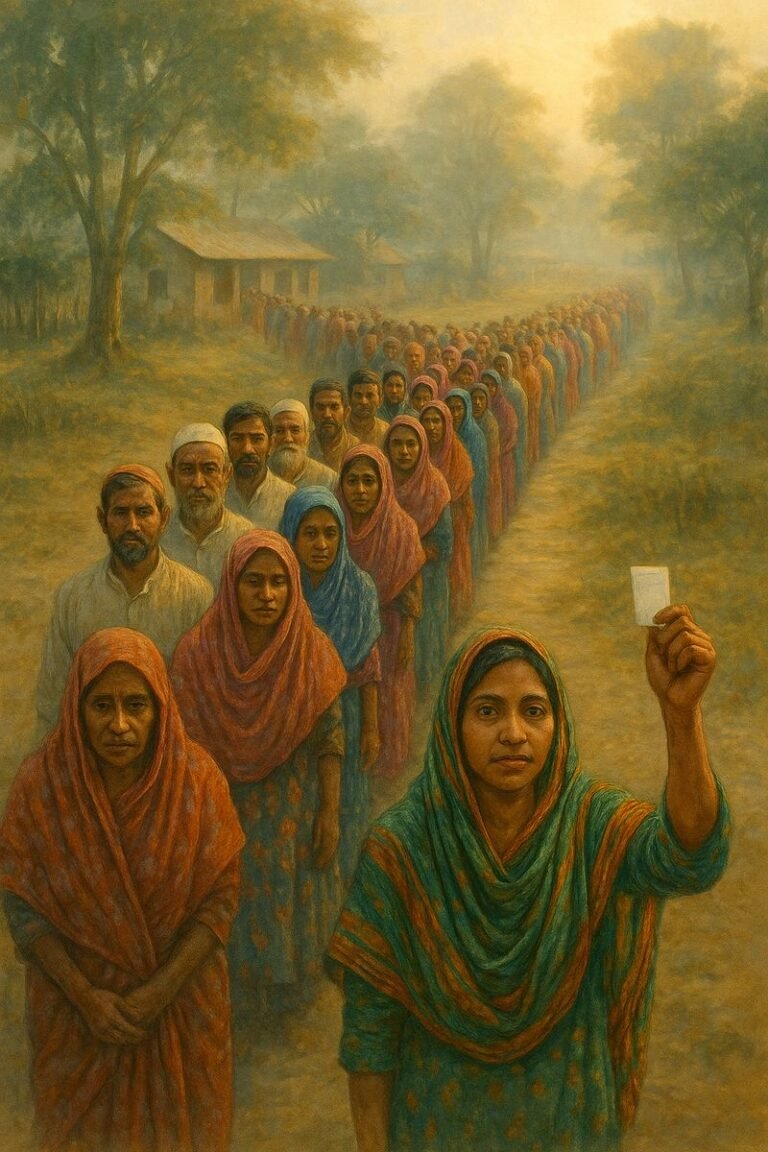
Post-2024 trauma means that many voters are sceptical of political promises. For democracy to regain currency, citizens must believe their ballots matter and can influence policy and governance. If turnout is low or skewed by distrust in institutions, the legitimacy of the next government will be contested from day one.
3. Rule of Law and Judicial Independence.
Legal proceedings against political figures have been polarising. Observers will monitor whether the judiciary operates independently of political pressure, particularly in election-related disputes. A perception of fairness here is essential to reinforcing democratic norms.
The transitional period presents both opportunities and risks. A well-managed, credible election could reset Bangladesh on a democratic trajectory. A flawed contest, by contrast, could deepen polarisation and erode institutional credibility.
Corruption: Expectations Versus Reality
Corruption has long been a pervasive problem in Bangladesh. Governance challenges have spanned petty bribery to high-level patronage networks, affecting public procurement, public services, and regulatory enforcement. Anti-corruption pledges have been central to political rhetoric for years, but substantive success has been limited.
The interim government came to office on a platform of accountability. It has advanced high-visibility cases and maintained anti-corruption rhetoric. But meaningful, systemic reform requires more than headline arrests; it demands institutional strengthening, protection for whistleblowers, enhanced transparency, and robust oversight mechanisms that operate independent of political influence.
Expectations for anti-corruption performance in 2026 are mixed:
-
Optimists believe that a new parliament can enact stronger asset-disclosure legislation, strengthen the anti-corruption commission, and introduce digital governance to reduce administrative discretion and rent-seeking.
-
Sceptics caution that political bias and retribution risk making anti-corruption efforts selective. If enforcement targets only political opponents while sparing allies, public perceptions of fairness will suffer.
A credible election outcome that reinforces institutional independence can catalyse genuine anti-corruption governance. Conversely, politicised crackdowns will undermine trust in both political and economic systems.
The Media’s Role: Between Aspiration and Constraint
Bangladesh’s media environment has been sharply contested in recent years. Journalistic freedom has oscillated between assertive reporting and state pressure. Independent outlets have sought to investigate corruption, human rights abuses, and governance failures, but journalists frequently face legal and extralegal constraints.
In the run-up to 2026, the media’s role is consequential:
-
Information Provision. Responsible reporting can educate voters about platforms, candidate records, and policy implications. This encourages informed participation and helps inoculate the electorate against misinformation.
-
Watchdog Function. Investigative journalism can expose abuses of power and serve as a check on both state and non-state actors. However, this function is contingent on safety for journalists and legal protections.
-
Risks of Polarisation. Media outlets aligned with particular political interests risk contributing to inflammatory rhetoric. Sensationalism and partisanship can erode public trust and intensify divisions rather than facilitate constructive debate.
To strengthen democratic norms in the upcoming election, there needs to be space for independent reporting, protection for journalists, and regulatory clarity that adheres to international standards on free expression. Civil society and international partners can support this ecosystem, but sustainable media integrity must take root domestically.
What the World Is Watching
The international community — from regional neighbours to global democracies — is closely observing Bangladesh’s transition. Geopolitically, Bangladesh occupies a strategic position in South Asia, with economic ties to China, India, the United States, and the Middle East. How Dhaka navigates complex geopolitical pressures while sustaining internal reforms will attract sustained diplomatic focus.
International election observers may be invited, and their assessments will influence global perceptions of legitimacy. Constructive engagement — balancing respect for sovereignty with adherence to democratic principles — will be a delicate diplomatic task.
A Candid Prognosis
As Bangladesh approaches 12 February 2026, expectations are cautious but not bleak. The election is an opportunity to re-embed democratic practices after upheaval, strengthen political accountability, and empower a generation of voters aspiring for change. However, significant risks remain:
-
Political Fragmentation. Diverse parties and movements may struggle to form stable governance coalitions if no single group secures a clear mandate.
-
Institutional Weakness. If electoral institutions are perceived as partial or ineffective, outcomes may fail to quell political unrest.
-
Media Vulnerabilities. Constraints on free reporting can limit public discourse and weaken checks on power.
-
Corruption Persistence. Without deep systemic reforms, corruption will continue to sap public trust and economic resilience.
The 2026 election is more than a ballot; it is a referendum on Bangladesh’s political evolution after an extraordinary period of civic upheaval. Citizens, the media, political parties, civil society, and international partners all play roles in shaping a credible, inclusive, and forward-looking outcome.
Conclusion
Bangladesh in 2026 stands at a crossroads. The election scheduled for 12 February is far more than a procedural milestone; it is an inflexion point for national identity, democratic consolidation, and institutional integrity. If the process upholds fairness, transparency, and inclusivity, it could usher in a new chapter of accountable governance. If it falters under pressure from entrenched interests, polarisation, or weak oversight, the promise of 2024’s civic uprising may go unfulfilled.
For citizens weary of political instability yet hopeful for change, the coming months will test both patience and resolve. For observers and participants alike, this election is a defining moment in Bangladesh’s stride toward a more open and accountable democratic future.