
For centuries, the printed book has been one of humanity’s most enduring inventions. Empires have risen and fallen, technologies have transformed societies, and methods of communication have changed beyond recognition—yet the book has remained beside us. As we look towards the next hundred years, many people wonder whether printed books will survive in a world increasingly dominated by screens, artificial intelligence, virtual reality and instantaneous digital information.
My belief is not merely that printed books will survive, but that they may become more meaningful, more beautiful and more treasured than ever before.
The future of the printed book may not be one of mass consumption but of conscious appreciation. Digital technology will continue to provide convenience. Readers will carry entire libraries on lightweight devices, access rare manuscripts within seconds and translate foreign works instantly. Artificial intelligence may create personalised learning materials and recommend books according to a reader’s mood, interests and intellectual curiosity.
Yet the very abundance of digital information may create a renewed hunger for something permanent, tangible and human.
A printed book has weight, texture and presence. It does not disappear when a battery dies, a subscription ends or a technology becomes obsolete. It can be held, annotated, inherited and passed from one generation to another. A book found on a grandparent’s shelf may contain not only the author’s words, but also handwritten notes, folded pages, faded photographs and memories of another life.
In the next century, printed books may increasingly become works of art. Publishers could use environmentally sustainable paper, plant-based inks and biodegradable materials. Books may be produced locally through advanced printing technology, reducing waste and unnecessary transportation. Readers might order individually designed editions, choosing the cover, typography, illustrations and binding.
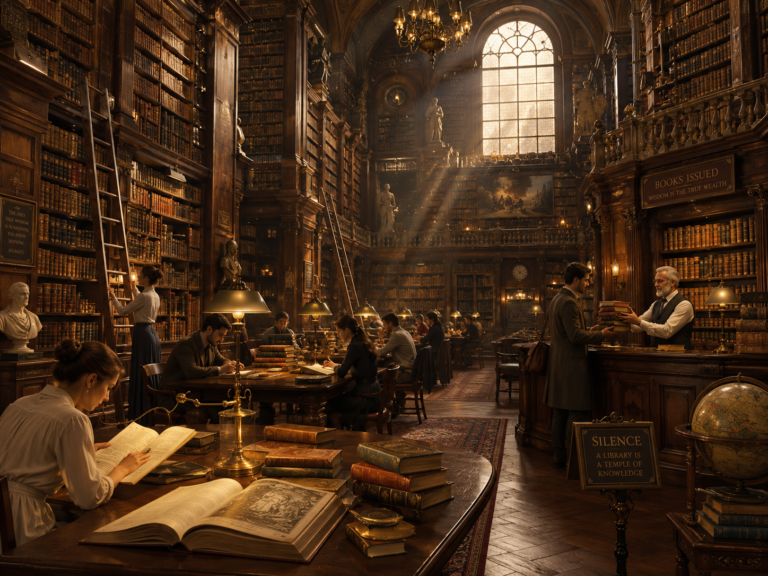
Libraries, too, could experience a magnificent rebirth. Rather than becoming silent warehouses of old volumes, they may evolve into vibrant centres of knowledge, conversation and imagination. Future libraries could combine printed books with digital archives, holographic exhibitions, oral-history recordings and interactive learning spaces. They may serve as peaceful sanctuaries from the relentless noise of the online world.
The printed book may also become a symbol of intellectual freedom. Digital information can be altered, removed, restricted or lost. A physical book, once placed in the hands of readers, possesses a certain independence. It becomes part of the public memory. In a century when information may be increasingly controlled by algorithms, printed books could remain guardians of dissent, history and uncomfortable truth.
Perhaps future families will establish personal libraries as carefully as they now design their homes. Children may receive beautifully printed books to mark important moments in their lives. Communities may preserve their histories through locally published memoirs, photographs and oral testimonies. Every town, village and cultural group could possess a printed record of its journey.
The future need not be a battle between printed and digital books. The two can exist together, each serving a different human need. Digital reading offers speed and accessibility; printed books offer intimacy, permanence and contemplation.
A century from now, humanity may live among intelligent machines, virtual worlds and astonishing scientific achievements. Yet somewhere, a child may still open a printed book for the first time. The pages will turn, the imagination will awaken, and another human being will enter a world created through words.
The printed book will not simply survive the future. It will remind the future what it means to be human.