
Bangladesh’s Empty Throne: Why Presidential Departures Keep Becoming National Crises
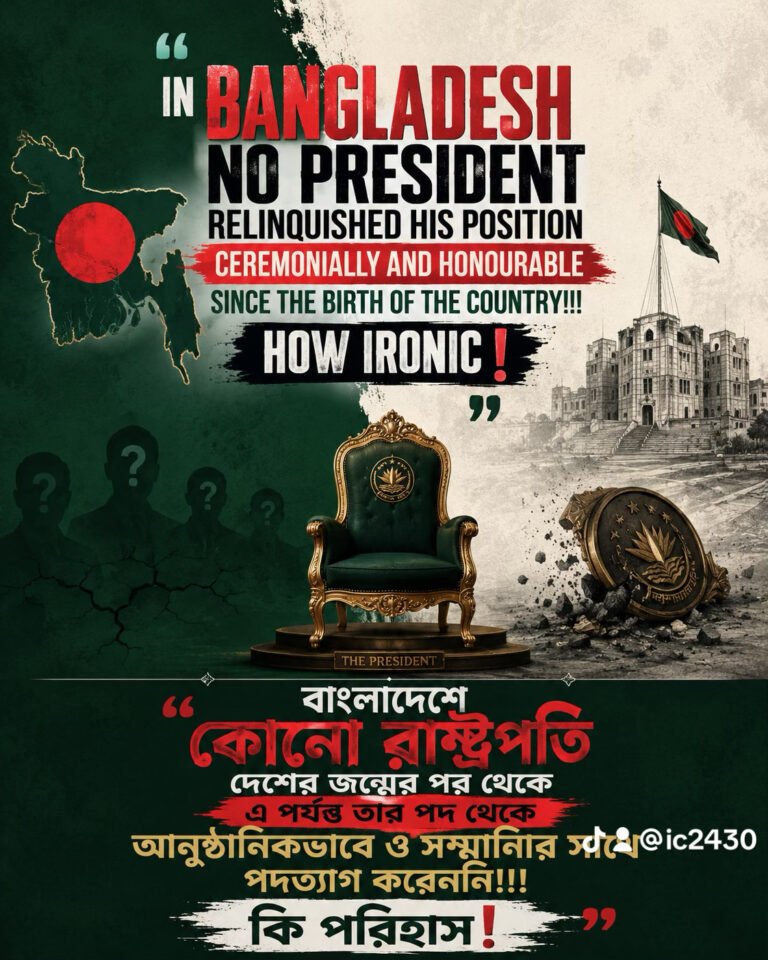
A presidency should end with a constitutional handover, a guard of honour, a final address and a dignified return to private life. In Bangladesh, however, the office of the head of state has too often been associated with assassination, military intervention, forced resignation, party pressure, illness, political isolation, or abrupt constitutional change.
The resignation of President Mohammed Shahabuddin on 24 July 2026, nearly two years before the scheduled end of his term, has therefore revived an old and painful question: why does the nation repeatedly fail to protect the dignity and continuity of its highest constitutional office? He formally cited serious health complications; the Speaker of Parliament is performing presidential duties until a successor is elected.
The historical pattern is deeply unsettling. Sheikh Mujibur Rahman, the founding president, was assassinated in office in August 1975. Khondaker Mostaq Ahmad was removed after only a few months. Justice Abu Sadat Mohammad Sayem resigned in 1977. Ziaur Rahman was assassinated in 1981. Justice Abdus Sattar was overthrown by a military coup in 1982. Ahsanuddin Chowdhury was dismissed, while Hussain Muhammad Ershad was forced to resign during the mass uprising of 1990. AQM Badruddoza Chowdhury resigned in 2002 under intense pressure from the ruling party. Mohammed Shahabuddin has now joined the long list of presidents whose tenures ended prematurely.
Yet accuracy matters. It is not literally true that no Bangladeshi president has ever left office normally or honourably. Abdur Rahman Biswas completed his tenure. Justice Shahabuddin Ahmed—who should not be confused with Mohammed Shahabuddin—completed his elected presidential term and retired in November 2001.
Most notably, Abdul Hamid completed two consecutive terms and received Bangladesh’s first grand formal state farewell for an outgoing president in April 2023, including a guard of honour, military music and a ceremonial departure from Bangabhaban. These exceptions do not weaken the central argument; they reveal what constitutional normality should look like.
The larger tragedy is that Bangladesh was not born through an ordinary political settlement. It emerged through a liberation war, mass sacrifice, displacement, and an ocean of blood. Millions dreamed of a republic governed by law, accountable institutions, and respect for the people’s mandate. When the presidency repeatedly becomes a casualty of coups, party feuds, street pressure, or institutional breakdown, the damage extends far beyond one individual. It diminishes the prestige of the state itself.
The presidency is largely ceremonial under Bangladesh’s parliamentary system, but symbols matter. A country that cannot ensure a peaceful and respectful transition at Bangabhaban sends a troubling message about its constitutional culture. The office must not remain a political musical chair—occupied when convenient and discarded whenever power changes hands.
Bangladesh now needs a settled democratic convention: fixed constitutional terms, transparent succession, institutional neutrality, and a dignified farewell for every outgoing president, regardless of party affiliation.
The question is no longer merely, “Who will be next?”
The more urgent question is, how long will Bangladesh allow its highest office to reflect political instability rather than national unity?
বাংলাদেশের শূন্য সিংহাসন: রাষ্ট্রপতির বিদায় কেন বারবার জাতীয় সংকটে পরিণত হয়
একজন রাষ্ট্রপতির মেয়াদ শেষ হওয়ার কথা সংবিধানসম্মত ক্ষমতা হস্তান্তর, গার্ড অব অনার, বিদায়ী ভাষণ এবং মর্যাদাপূর্ণভাবে ব্যক্তিজীবনে প্রত্যাবর্তনের মধ্য দিয়ে। কিন্তু বাংলাদেশের ইতিহাসে রাষ্ট্রের সর্বোচ্চ সাংবিধানিক পদটি বারবার জড়িয়ে পড়েছে হত্যাকাণ্ড, সামরিক অভ্যুত্থান, বাধ্যতামূলক পদত্যাগ, দলীয় চাপ, অসুস্থতা, রাজনৈতিক নিঃসঙ্গতা কিংবা আকস্মিক সাংবিধানিক পরিবর্তনের সঙ্গে।
২০২৬ সালের ২৪ জুলাই রাষ্ট্রপতি মোহাম্মদ সাহাবুদ্দিন নির্ধারিত মেয়াদ শেষ হওয়ার প্রায় দুই বছর আগে পদত্যাগ করায় সেই পুরোনো ও বেদনাদায়ক প্রশ্নটি আবার সামনে এসেছে—বাংলাদেশ কেন তার সর্বোচ্চ রাষ্ট্রীয় পদটির মর্যাদা, ধারাবাহিকতা ও নিরাপদ প্রস্থান নিশ্চিত করতে বারবার ব্যর্থ হয়? তিনি গুরুতর স্বাস্থ্যগত সমস্যার কথা উল্লেখ করেছেন; নতুন রাষ্ট্রপতি নির্বাচিত না হওয়া পর্যন্ত জাতীয় সংসদের স্পিকার রাষ্ট্রপতির দায়িত্ব পালন করছেন।
ইতিহাসের ধারাটি সত্যিই উদ্বেগজনক। স্বাধীন বাংলাদেশের প্রতিষ্ঠাতা রাষ্ট্রপতি শেখ মুজিবুর রহমান ১৯৭৫ সালের আগস্টে দায়িত্বে থাকা অবস্থায় নিহত হন। খন্দকার মোশতাক আহমদ কয়েক মাসের মধ্যেই ক্ষমতাচ্যুত হন। বিচারপতি আবু সাদাত মোহাম্মদ সায়েম ১৯৭৭ সালে পদত্যাগ করেন। রাষ্ট্রপতি জিয়াউর রহমান ১৯৮১ সালে নিহত হন। বিচারপতি আবদুস সাত্তার ১৯৮২ সালের সামরিক অভ্যুত্থানে অপসারিত হন।
বিচারপতি এ এফ এম আহসানউদ্দিন চৌধুরীকে সরিয়ে দেওয়া হয়, আর হুসেইন মুহম্মদ এরশাদ ১৯৯০ সালের গণ-অভ্যুত্থানের মুখে পদত্যাগে বাধ্য হন। ২০০২ সালে ক্ষমতাসীন দলের তীব্র চাপের মধ্যে রাষ্ট্রপতি এ কিউ এম বদরুদ্দোজা চৌধুরী পদত্যাগ করেন। এখন মোহাম্মদ সাহাবুদ্দিনও অসমাপ্ত মেয়াদ নিয়ে বিদায় নেওয়া রাষ্ট্রপতিদের দীর্ঘ তালিকায় যুক্ত হলেন।
তবে ইতিহাস নিয়ে কথা বলার সময় নির্ভুলতা জরুরি। বাংলাদেশের কোনো রাষ্ট্রপতিই কখনো স্বাভাবিক বা সম্মানজনকভাবে বিদায় নেননি—এ দাবি আক্ষরিক অর্থে সম্পূর্ণ সঠিক নয়। আবদুর রহমান বিশ্বাস তাঁর মেয়াদ পূর্ণ করেছিলেন। বিচারপতি সাহাবুদ্দীন আহমদ—যাঁকে মোহাম্মদ সাহাবুদ্দিনের সঙ্গে গুলিয়ে ফেলা উচিত নয়—নির্বাচিত মেয়াদ শেষ করে ২০০১ সালের নভেম্বরে অবসর নেন।
সবচেয়ে উল্লেখযোগ্যভাবে, মো. আবদুল হামিদ পরপর দুটি পূর্ণ মেয়াদ সম্পন্ন করেন এবং ২০২৩ সালের এপ্রিলে বাংলাদেশের ইতিহাসে প্রথমবার কোনো বিদায়ী রাষ্ট্রপতি হিসেবে আনুষ্ঠানিক রাষ্ট্রীয় বিদায় পান। তাঁকে গার্ড অব অনার, সামরিক বাদ্য এবং বঙ্গভবন থেকে আনুষ্ঠানিক শোভাযাত্রার মাধ্যমে বিদায় জানানো হয়েছিল। এই ব্যতিক্রমগুলো মূল বক্তব্যকে দুর্বল করে না; বরং সাংবিধানিক স্বাভাবিকতা কেমন হওয়া উচিত, তার উদাহরণ তুলে ধরে।
বাংলাদেশ কোনো সাধারণ রাজনৈতিক সমঝোতার মধ্য দিয়ে জন্ম নেয়নি। মুক্তিযুদ্ধ, গণত্যাগ, বাস্তুচ্যুতি, নির্যাতন এবং রক্তের সমুদ্র পেরিয়ে দেশটি স্বাধীনতা অর্জন করেছে। মানুষের আকাঙ্ক্ষা ছিল আইনের শাসন, জবাবদিহিমূলক প্রতিষ্ঠান এবং জনগণের ম্যান্ডেটের প্রতি সম্মান প্রতিষ্ঠা করা।
অথচ রাষ্ট্রপতির পদ যখন অভ্যুত্থান, দলীয় বিরোধ, রাজপথের চাপ কিংবা প্রতিষ্ঠানগত ভাঙনের শিকার হয়, তখন ক্ষতি শুধু একজন ব্যক্তির হয় না; ক্ষুণ্ন হয় রাষ্ট্রের মর্যাদাও।
সংসদীয় ব্যবস্থায় রাষ্ট্রপতির ক্ষমতা মূলত আনুষ্ঠানিক হলেও তাঁর প্রতীকী গুরুত্ব গভীর। বঙ্গভবনে শান্তিপূর্ণ, নিয়মতান্ত্রিক ও সম্মানজনক ক্ষমতা হস্তান্তর নিশ্চিত করতে না পারা আমাদের সাংবিধানিক সংস্কৃতির দুর্বলতাই প্রকাশ করে। রাষ্ট্রপতির বিদায়ের ধরন কেবল প্রটোকলের বিষয় নয়; এটি রাষ্ট্রের রাজনৈতিক পরিপক্বতা ও প্রতিষ্ঠানগত আত্মবিশ্বাসের প্রকাশ্য পরীক্ষা।
রাষ্ট্রপতির পদ রাজনৈতিক “মিউজিক্যাল চেয়ার” হতে পারে না—ক্ষমতা বদলালেই চেয়ার বদলাবে, আর মানুষটি অপমান, চাপ বা অনিশ্চয়তার মধ্যে বিদায় নেবেন।
বাংলাদেশের এখন প্রয়োজন একটি স্থায়ী গণতান্ত্রিক রীতি: নির্ধারিত মেয়াদের প্রতি সম্মান, স্বচ্ছ উত্তরাধিকার প্রক্রিয়া, রাষ্ট্রীয় প্রতিষ্ঠানের নিরপেক্ষতা এবং দলীয় পরিচয় নির্বিশেষে প্রত্যেক বিদায়ী রাষ্ট্রপতির মর্যাদাপূর্ণ বিদায়।
প্রশ্নটি কেবল “এরপর কে?” নয়।
আরও জরুরি প্রশ্ন হলো—বাংলাদেশ তার সর্বোচ্চ রাষ্ট্রীয় পদটিকে আর কতদিন জাতীয় ঐক্যের প্রতীক না বানিয়ে রাজনৈতিক অস্থিরতার প্রতিচ্ছবি হিসেবে রাখবে?